Robot heads singing the White Lotus theme
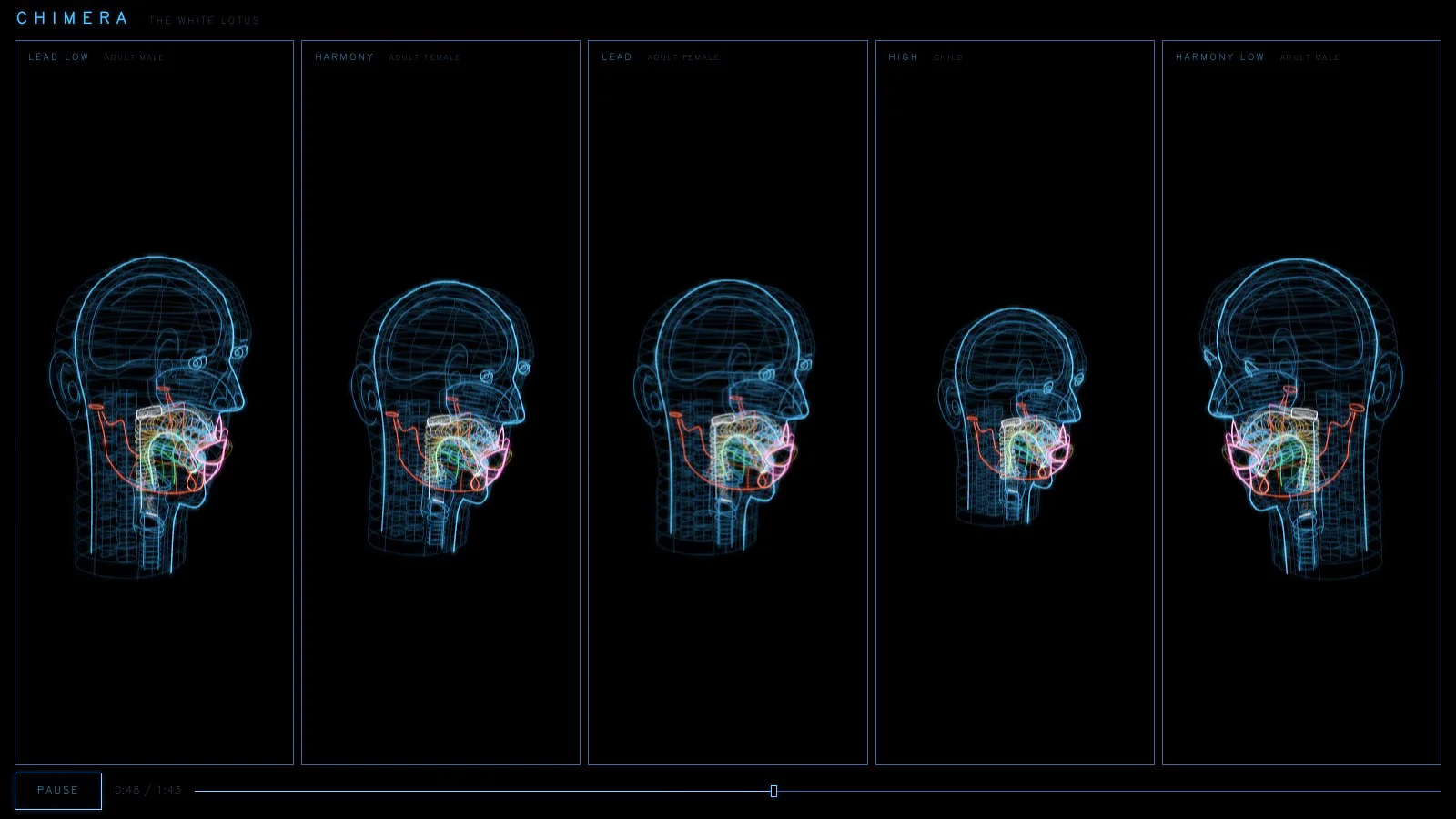
Everyone on X is posting videos of CHIMERA, a voice synthesizer by Jameson Hodge. It doesn't use samples. It simulates the whole airway: lungs, vocal folds, tongue, lips. The videos show a row of see-through 3D heads singing a song together, and you can watch every mouth move.
I wanted one of those for the White Lotus season 2 theme. It's one of my favorite shows, and that theme is mostly wailing vocals with almost no words, so robot heads seemed like a good fit.
Claude can't hear
I asked Claude Code to do it. It cloned the repo, built the engine, and found that the videos come from a built-in page that plays a pre-rendered song on up to five heads. It pulled the song's audio, split the vocals from the music, tracked the pitch of the voice, and turned that into notes for the heads to sing.
The catch is that Claude can't listen to any of it. Every check it made was a measurement: it tracked the pitch of what the heads sang and compared it to the original, frame by frame. My ears were the only real test.
Get the next note like this by email.
about one a week · no spam · one-click out · or rss
Four versions
Version 1 was 40 seconds of voices alone, no music. It matched the notes, and I told Claude it was unrecognizable. A melody without the drums and the groove isn't the White Lotus theme.
Version 2 put the original music back underneath, with the original vocal removed, and covered the whole song. Closer, but it still didn't sound like the show.
Version 3 moved the notes to a finer grid. Still not right.
For version 4 I told Claude the warble in the original was much quicker than ours, and that once the song speeds up, parts were missing. Both were true, and measuring found out why:
- The warble. The heads were singing tidy notes with the synth's own slow vibrato added. The original voice is never still: it wobbles about six times a second and flicks up between notes. So Claude stopped writing notes and fed the heads the original's actual pitch curve instead, in 23 ms steps. The synth smooths out fast pitch changes, so it tested a fake 7 Hz wobble first, measured how much got lost, and boosted the curve to make up for it.
- The missing parts. After the beat drops, the original is two or three voices singing at once. The earlier versions had all five heads singing one line. Now the harmony and the high voice each get their own head.
- A part that never existed. Versions 2 and 3 had two heads singing a low chant. It wasn't in the song. The pitch tracker was hearing two high voices at once and reporting the low note they have in common.
The lesson
The numbers were good from the first version. The lead matched the original within a semitone 98% of the time, and it still sounded wrong. The measurements only got useful when I said what I was hearing, and Claude went looking for the number that explained it.
Liked this? Get the next note by email.
about one a week · no spam · one-click out · or rss